
Today's Bet, Predictions Today: The Honest Path Through UK Betting
 Available in US
Anyone who has typed “best bet prediction for today” into a phone at half eight in the morning wants the same thing: a name, a price, a quick win before the day gets going. The page below is built around that impulse, then takes the air out of it carefully, because the honest answer to that search is more useful than another tip. A tip is a guess dressed up; a guide tells you how to read the guesses you meet, what they cost and what they are worth when the offer on the table has finished talking. The angle of the page is choice — which paths exist for a punter who wants to build today’s bet rather than have one handed to them, and who each path suits.
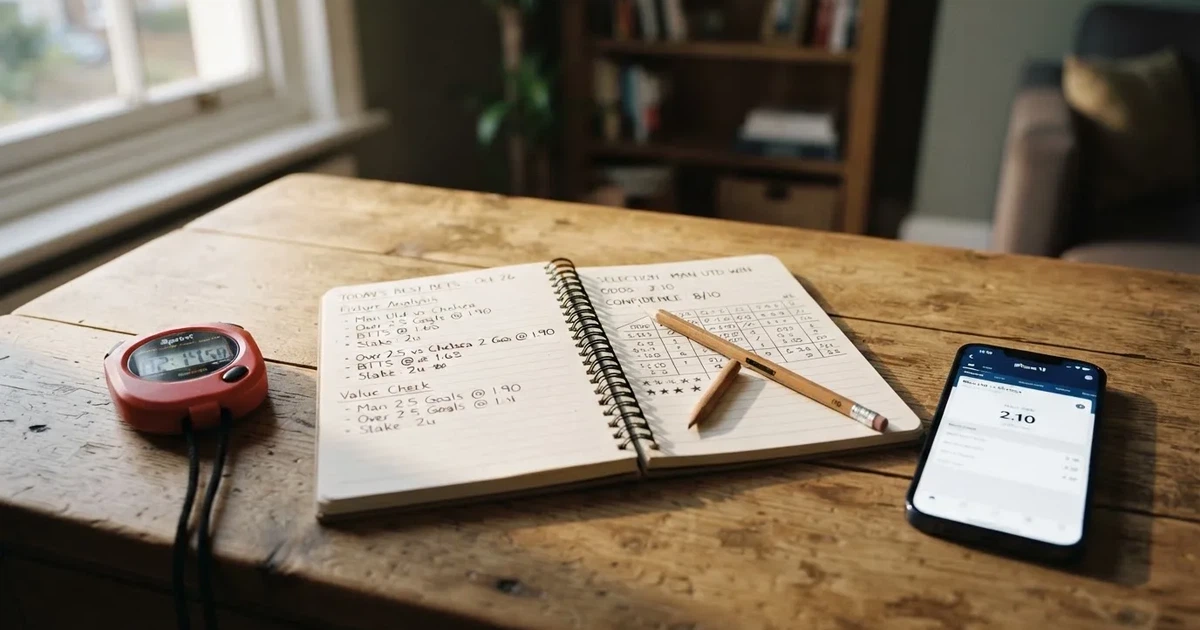
The figures below were checked on 30. October 2026 against the Gambling Commission’s public register and each operator’s own published terms. The Commission’s register is the only test of who holds a Great Britain remote licence; anyone selling certainty in front of that register is selling the wrong thing.
Apps and Handsets: Where Today’s Bet Actually Gets Placed
The screen the bet is placed on matters more than the page assumes. Most bets in Great Britain are no longer struck over a counter; they are tapped into a phone on a train, in a queue at the bookies, or in the kitchen while the kettle boils. The app is the bet — its layout, its in-play grid, its cash-out button — and the bet’s cost often lives inside that screen rather than in the headline offer that drew the punter there.
What a Betting App Carries That a Desktop Site Does Not
A native app pushes notifications: a price boost the punter asked for, the team news dropping an hour before kick-off, a goal alert on an accumulator that is still live. A browser tab on a desktop does none of that unless the punter remembers to look. Push is the single most useful thing an app does, because the betting market is a market of seconds — a price is alive, a starting price drifts, a Rule 4 deduction is applied within minutes of a non-runner — and the punter who sees it first pays less for the same edge.
The trade is battery, attention and a permission slip. Push notifications switch off after a few noisy weekends, and a punter who turned them off in a sulk has paid for it in missed prices and missed cash-out windows before the season is out.
The Three App Shapes the UK Market Sells
The GB App Store sorts sports-betting apps into roughly three shapes, and the punter’s job is to recognise which shape sits on the home screen.
The first is the all-in-one: a sportsbook with casino, live casino, virtual sports and sometimes a lottery product stacked inside one app. BetVictor, Paddy Power, NetBet and Lottoland sit in this group. They are convenient — one login, one wallet, one set of safer-gambling tools — and the convenience has a cost, which is that the marketing pings for the casino product arrive on the same screen as the football alerts. A punter who opened the app for the racing will meet free-spins offers in the same session.
The second is the specialist sportsbook: a sports-only product with deep markets, live streaming, bet builders and acca features, but no casino attached. VBet, DragonBet, Star Sports, Sky Bet, bet365, Betfair Sportsbook, William Hill and Fitzwilliam Sports sit here. The screen is calmer; the markets are wider; the safer-gambling controls tend to sit higher in the menu because the only product is the betting product.
The third is the hybrid with a sportsbook bolted on: an exchange, a spread-bet firm, a tote, a copy-betting platform. Betfair’s sportsbook, Spreadex, Copybet, London Bet and Betmaster sit here. These handle markets the specialist sportsbooks do not — lay bets, spread positions on a football index, copied bets from named tipsters — and they ask for a different kind of attention in return.
What the App’s Own Description Says, and What It Doesn’t
An app store page is a marketing page dressed up as a product page. It tells the punter what the app *offers*; it does not tell the punter what the app *costs*. The cost sits in the terms behind the offer — the wagering requirement, the minimum odds on the qualifying bet, the stake cap that turns a price boost from headline value into pocket change. The app store description is a list of features; the terms page is the same list with a price tag.
A punter who reads only the description sees an app. A punter who reads the description and the terms sees the same app and knows what to send it home with.
Recognising the Live-Betting App Before the Match Starts
A live-betting app earns its keep between the teams walking out and the final whistle. The grid needs to update fast enough that the cash-out number is not five seconds stale; the live stream needs to keep up with the grid so the punter is not betting blind; and the in-play markets need to be deep enough that the cash-out button is not offering one price on three markets at once.
bet365’s app carries Match Live, Bet Track and a Live Golf Tracker for following positions in play, with in-play betting and live streaming across a global fixture list. Betfair Sportsbook’s app adds a 90 Minute Payout market for football, free live streaming of UK and Irish racing and football within the app, and Bet Builder for pre-match work. William Hill’s WHTV streaming needs a funded account or a bet in the last 24 hours, with a £1 qualifying bet for live racing, and Betting TV is free for selected UK and US racing and UK greyhounds. VBet’s app, published by SCGO Limited, offers Bet Builder, pre-match and in-play betting, live streaming and a live calendar with results and stats. These are the apps built for the in-play punter. The punter who only bets pre-match is paying for a feature they never use; the punter who bets in-play needs it.
Recognising the Safer-Gambling App Before the First Bet
Every GB-licensed app carries the same baseline: GAMSTOP registration, deposit limits, time-outs, self-exclusion, reality checks and links to GamCare, GambleAware and Gambling Therapy. The question is whether those controls sit at the top of the menu or at the bottom of a help page nobody reads.
A punter who wants the controls to *work* — not exist, work — chooses the app where the safer-gambling menu sits one tap from the home screen and where the deposit limit can be set in £5 increments, not the app where the menu is buried under “About us” and the deposit limit is set in £50 jumps. Unibet’s safer-gambling menu covers deposit limits, a Player Profile test, product restrictions and self-exclusion, with live chat support and links to BeGambleAware, GamCare, GAMSTOP, Gambling Therapy and the BGC — that menu is named, not implied, which is the test.
Building a Prediction: How a Tip Is Actually Built
A “prediction” is a guess about an outcome dressed in a confidence the punter rarely sees the cost of. The cost sits in how the guess was made: what data went in, what the bookmaker’s odds already knew, what was filtered out, and how the punter’s own stake relates to the punter’s own bank.
The Four Inputs a Real Prediction Stands On
A tip built on four inputs is a working tool; a tip built on one is a guess.
Form. The recent run of results, weighted by the quality of the opposition. A side that has won four on the bounce against relegation candidates tells the punter less than a side that has drawn two and lost two against top-half opposition, because the strength of schedule matters. Form on its own is a mirage when the opposition is weak.
Statistics. Expected goals, shots on target, possession adjusted for opponent, corners, cards, the tackle and intercept count. Statistics give shape to a contest that form alone flattens. A 2-1 win with 0.6 expected goals tells a different story from a 2-1 win with 2.4.
Line-ups and team news. The first eleven, the injuries, the suspensions, the manager’s tendency to rotate for a cup tie in midweek. A prediction built before the line-ups are out is built on half the data; a prediction built after is built on the same data the bookmaker has. The bookmaker’s price moves on team news first; the punter who reads the team news before the price moves has paid less for the same edge.
The market’s own odds. The bookmaker’s price is not a forecast; it is a forecast with a margin bolted on. A prediction that lands at the same number the market has already priced is a prediction the punter paid the margin on. A prediction that lands above the market’s implied probability is a value bet; below it is a punt dressed as analysis.
What “Value” Means, and Why No Tip Is Ever Certain
A value bet is a price that is higher than the true probability of the outcome, once the bookmaker’s margin has been taken out. The arithmetic is straightforward; the application is not, because the “true probability” is the punter’s own estimate and is never knowable from the outside.
The honest statement is the one the tipster never makes: a value bet is a bet the punter believes is mispriced, and the punter may be wrong. The bookmaker has more data, more traders, more history and a margin that compounds with every market. The punter has a sharper view of one contest, or one league, or one team — and that sharper view is the only edge a tip ever really offers.
There is no tip that is certain. The bookmaker’s margin sits inside every price; a goal in the first minute, a red card in the twentieth, a rain-sodden pitch that turns a 2.5 goals line into a 1.7 line — none of these are in the data the tip was built on. A tip is a probability, not a promise, and the punter who treats it as a promise pays the difference in the long run.
Bankroll Discipline: The Part the Tip Sheet Skips
A bankroll is the amount the punter has set aside for betting, separate from rent, food and the rest of life. The rule is simple: every stake is a small, fixed percentage of the bankroll — usually one to three per cent — and the rule does not bend for “certainty”.
A punter who stakes ten per cent of the bankroll on a “sure thing” and loses has lost a tenth of the bank on a guess; a punter who stakes two per cent has lost two per cent and is still betting. The mathematics of recovery are unforgiving: a punter who halves the bank needs a hundred per cent return to get back to even, and that return is the kind of run that does not exist.
The staking plan sits above the tip, not below it. A great tip with bad staking loses money; a mediocre tip with disciplined staking turns a profit in the long run.
Staking Plans the Punter Will Meet
The flat stake is the simplest: the punter bets the same amount on every selection. It is dull and it works, because the punter’s edge compounds across many bets rather than riding on one. The punter who uses a flat stake is the punter who can sleep after a loss.
The level stake as a percentage of bank is the small refinement: the stake is one or two per cent of the current bank, so the stake shrinks after a loss and grows after a win. The bank does the work; the punter does not need to chase.
Progressive staking — Martingale, Fibonacci, Labouchère — looks clever on paper and is ruin on the page. The stake doubles after a loss to “win back” what was lost, and the doubling meets the bookmaker’s stake limit before the bank is recovered. The punter who runs a progressive plan at a £5 starting stake has a limit problem at stake eight; the punter at a £500 starting stake has the same problem, just dressed in better clothes.
Why No Tip Sheet Is an Income
A tip sheet charges for tips and offers no guarantee. The tipster’s incentive is to sell next week’s tips, not to be right about this week’s. The punter’s incentive is to be right about this week. The two incentives do not align, and the punter who pays for tips has bought a marketing relationship dressed as a research product.
The honest path is the one the page is built around: the punter learns how a tip is built, builds a few of their own in a league they know, stakes a small percentage of that bankroll on each, and treats the result as data rather than destiny. The data compounds; the destiny does not.
The Ten UK Bookmakers Worth a Closer Look
The list below is the licensed set the page is built around, in the order the apps sit in the App Store and the order the punter meets them in a Google result. It is not a ranking — no single brand is “the only” licensed one, a place on a list is not a licence, and a bookmaker the punter has not heard of is just as licensed as the one his grandad used.
| Brand | Gambling Commission remote licence and holder | What the operator’s own terms say about today’s bet |
|---|---|---|
| VBet | 044662-R-324273-022 (account 44662), SCGO Limited | App carries Bet Builder, pre-match and in-play markets, live streaming and a live calendar with results and stats |
| DragonBet | 064908-R-339041-003 (account 64908), DragonBet Ltd | Cash out both in-play and pre-match, with live streaming of racing |
| Star Sports | 009177-R-104555-019 (account 9177), Star Racing Limited | UK independent bookmaker with virtual sports, casino and live casino alongside the sportsbook |
| Sky Bet | 067370-R-341330-005 (account 67370), SBG Sports Limited | Welcome offer of £30 in free bets as three £10 tokens after a £5 deposit and a 5p first single or each-way bet at 1/1 or greater |
| NetBet | 039170-R-319343-032 (account 39170), Netbet Enterprises Limited | Daily Boosts, Profit Boosts and free bet offers, a Bet Builder with instant dynamic odds and sports stats for major leagues |
| Paddy Power | 039439-R-319330-013 (account 39439), PPB Counterparty Services Limited | Bet Builder+, Popular Bet Builders, Super Sub (the bet rolls over to the replacement if a selected player is substituted), expanded Win More markets and player and ACCA stats |
| Fitzwilliam Sports | 048760-R-335434-009 (account 48760), SBKI Limited | Phone and live chat with the office open 09:00 to 21:00, Monday to Sunday, messenger replies within 90 seconds on average |
| BetTom | 064959-R-339314-003 (account 64959), Bet Tom Limited | Sports welcome offer of 50% back as a free bet of up to £50, with a matching 50% back up to £50 as free slot funds for casino |
| Spreadex | 008835-R-104580-022 (account 8835), Spreadex Limited | FCA-regulated spread betting and Gambling Commission-regulated fixed-odds betting, with new-customer offer of £60 in free bets for a £10 fixed-odds bet, qualifying bet within 28 days of opening |
| QuinnBet | 061011-R-335683-004 (account 61011), QuinnBet (Gibraltar) Limited | Free bets valid for 7 days from credit, usable on any market at 1/2 (1.5) or greater with a maximum odds of 50/1, straight accumulators allowed, Trixies, Patents and Yankees excluded |
The table is a snapshot of the licence and the offer, not a comparison of which bookmaker is “best”. The punter who reads the table as a leaderboard has read it wrong: the punter who reads it as a shortlist has read it right.
How a Bookmaker’s Offer Actually Pays Out
A “free bet” is a token the punter uses to place a bet without staking their own cash. The catch — and there is always a catch — is that the stake is usually not returned with a winning free bet. A £10 free bet at 5/1 (6.00) returns £60 in profit, not £70; the £10 stake was the bookmaker’s, and the bookmaker keeps it.
A “deposit bonus” credits the punter’s account with bonus funds when the punter deposits their own. The catch is the wagering requirement: the bonus must be turned over a set number of times, often at minimum odds, before any winnings become withdrawable cash. The Promotion Rules in force since 19 January 2026 cap wagering requirements on bonuses at 10x — a £10 bonus at 50x needed £500 of bets; under the cap no more than £100.
A “price boost” or “enhanced odds” inflates the headline price the punter sees. The catch is the stake cap — a £50 maximum stake at the boosted price is a £50 maximum, and the punter who reads “50/1” without reading the cap has read the marketing.
An “acca insurance” refunds the stake as a free bet if one leg of an accumulator lets the punter down. The catch is the minimum number of legs (usually four or five) and the minimum odds per leg; a one-leg acca is not insured, because it isn’t an acca.
A “risk-free” bet refunds the stake as a free bet, not as cash, when the qualifying bet loses. The phrase reads like a refund; it isn’t one. The punter’s first bet loses £10 in real money and gets back £10 in free-bet tokens that work under the free-bet rules above.
The Margin the Punter Pays on Every Bet
The margin is the slice of every pound bet the bookmaker keeps, on average. It is built into every price, and a 5% margin on a market is a 5% slice of every stake that never comes back to any punter.
For an illustrative two-way market priced at 1.90 / 1.90 (9/10 each side), the implied probabilities add to 1 ÷ 1.90 + 1 ÷ 1.90 = 0.5263 + 0.5263 = 1.0526, so the payout share is 1 ÷ 1.0526 = 0.95, and the margin is 1 − 0.95 = 0.05, or 5%. The bookmaker keeps 5p of every pound bet on that market; the punters together get back 95p.
The figure is illustrative — no quoted price — and the rule holds at any margin: the more outcomes the market has and the closer the prices, the tighter the margin; the fewer outcomes and the more lopsided the prices, the wider the margin. A 1X2 football match with the favourite at 1.40, the draw at 4.00 and the outsider at 8.00 carries a different margin to a two-way basketball line at 1.91 / 1.91.
The punter’s job is not to find a “no-margin” bookmaker — there isn’t one — but to find the market where the margin is tightest, the price is sharpest, and the punter’s own estimate of the outcome is sharper still.
The Fundamentals: What Every Punter Meets First
The licensed bookmaker is the foundation; the offer is the floor; the app is the front door. None of those are the bet.

Identity, Age and the First Deposit
Every GB-licensed bookmaker verifies name, address and date of birth before a customer can deposit or gamble, including with a free bet or bonus. The check has been mandatory since 7 May 2019. There is no anonymous play at a licensed site, and the punter who wants anonymity cannot, at this layer, have it.
The minimum age is 18 across Great Britain. A punter under 18 cannot open an account, cannot deposit, cannot bet, cannot withdraw a winning free bet. A bookmaker that does not ask for age is a bookmaker that has not asked for a licence, and a punter on that site has none of the protections below.
The Licence Is the Test, Not the Name
The Gambling Commission’s public register is searchable by business name, trading name, domain or account number, and it is the whole test of whether a brand holds a GB licence. The domain proves nothing — a licensed operator may use .com or .co.uk, and an unlicensed operator will use whichever sells best. The register, not the address bar, is what the punter trusts.
A punter who cannot find the brand on the register is a punter who should not be on the brand.
The Safer-Gambling Controls the Punter Sets First
GAMSTOP is the national multi-operator online self-exclusion scheme and a mandatory licence condition for online operators since 31 March 2020. Periods are six months, one year, five years, or five years with auto-renewal, and after the minimum period the exclusion stays in place for a further seven years unless the customer asks GAMSTOP to remove it. GAMSTOP covers online sites and apps; betting shops use a separate service.
A punter who joins GAMSTOP cannot open a new online account at any GB-licensed bookmaker for the chosen period. The punter who wants to bet today cannot be on GAMSTOP today.
Deposit limits are the customer’s, not the state’s. Remote Technical Standards (RTS 12) require operators to offer a gross deposit limit on a fixed time frame, with the first changes applied since 31 October 2025 and a second phase postponed to 30 September 2026 — the second phase’s live status is not established. There is no state-set deposit ceiling for betting, and the punter who wants a hard ceiling sets it themselves.
The Financial Vulnerability Check
Since 28 February 2025, a financial vulnerability check has applied to licensed remote betting when a customer’s deposits minus withdrawals exceed £150 in a rolling 30 days. The check is a public-record check — bankruptcy, county court judgments, similar registers — not an income check and not a credit reference check.
A punter whose net deposits cross £150 in 30 days will be asked to confirm the check; a punter whose deposits stay below £150 in net terms is not. The threshold is small, and the punter who crosses it by accident — a winning week that pulled deposits up before withdrawals caught up — is still asked.
Financial risk assessments — the “affordability checks” of the press — are announced in a staged plan published by the Commission on 7 July 2026, with no start date. They are not in force at the time of writing, and the punter who reads otherwise has read a press release rather than the plan.
The Payments Rule That Snags the E-Wallet
Credit cards are banned for gambling in Great Britain since 14 April 2020, including credit-card-funded payments through an e-wallet. A punter who funds a Skrill or Neteller wallet from a credit card cannot move that money into a betting account, even if the e-wallet itself is permitted.
Debit cards and bank-based payments are not covered by the ban. A punter who pays with a debit card, an instant bank transfer or a direct debit is paying in money the bookmaker is allowed to take. A punter who pays with a credit card is paying in money the bookmaker is not allowed to take — and a bookmaker that takes it is a bookmaker the punter should not be on.
The player pays no tax on betting winnings in Great Britain. A professional gambler should ask HMRC or an adviser; a casual punter keeps the whole return.
The Statute Behind the Licence
The Gambling Commission licenses the whole commercial market under the Gambling Act 2005, which covers Great Britain (England, Scotland and Wales). Northern Ireland is outside the Act and has its own older law, so a GB licence does not regulate betting in Northern Ireland. Since the Gambling (Licensing and Advertising) Act 2014, an operator whose remote facilities are used in Great Britain needs a Commission licence wherever it is based — sections 33 and 36 of the 2005 Act, as amended. A Curaçao, Maltese or Gibraltar licence is not a substitute at the point of consumption.

The Commission’s public register is searchable and is the test. There is no state monopoly and no cap on the number of licences. Betting licence types — remote general betting standard (real events), remote general betting standard (virtual events), remote general betting limited, remote pool betting and remote betting intermediary — sit under the same Act, and an operator’s category is named on the register, not invented by the operator.
Financial Spread Betting and the FCA
Financial spread betting is regulated by the Financial Conduct Authority, not the Gambling Commission. Spreadex is the dual-regulated case in the licensed set above: FCA for spread betting, Commission for fixed-odds betting. Spread-betting losses can exceed the deposit, and the FCA’s protections sit on top of the Commission’s; the punter who uses Spreadex for sports spread betting is using a product whose worst case is bigger than the deposit. The punter who only wants fixed-odds betting is on the Commission’s side of the fence.
Advertising Rules the Punter Meets in the Feed
Advertising is not licensed by the Commission. It runs through the CAP Code (non-broadcast) and BCAP Code (broadcast), enforced by the ASA, alongside the LCCP marketing conditions. CAP Code section 16: marketing must be socially responsible, must not be of strong appeal to under-18s, and no one who is or seems to be under 25 may be featured gambling or play a significant role in an advertisement, with an exception for marketing placed where a bet can be made directly. That rule concerns who may appear in the advertisement, not who may bet.
Since 19 January 2026, wagering requirements on bonuses are capped at 10x and mixed-product promotions — an offer that requires gambling on two or more product types, such as “bet on football to get free spins” — are banned. Whether the cap applies to free bets with no wagering condition, and any cap on the money value of a bonus, are not established in the public rule; the punter who reads the offer’s terms reads the cap that applies.
“Whistle-to-whistle” is an industry code, not law: since 1 August 2019, betting advertisements are not shown on TV from five minutes before a live sporting event to five minutes after it, before the 9pm watershed, with horse and greyhound racing excluded. The Premier League clubs’ withdrawal of gambling sponsorship from the front of matchday shirts from 2026/27 is voluntary, not law; sleeves and hoardings remain.
Tax, Duty and the Operator’s Margin
General Betting Duty is the operator’s tax on gross profits, currently 15%. From 1 April 2027 a new remote betting rate of 25% applies within it, while remote bets on UK horse racing, bets on self-self-service betting terminals, pool betting and in-person betting stay at 15%. Until 1 April 2027 the remote rate stays at 15%. Whether operators pass the duty on through odds is not established; the punter never sees the duty on the betting slip.
Spread betting has its own rates: 3% financial, 10% other. The Commission’s statutory levy is a separate charge, not a tax.
Offshore: What the Punter Loses
A GB licence is compulsory at the point of consumption. Providing gambling facilities in Great Britain without the licence the Act requires is an offence under section 33 of the Gambling Act 2005 — up to 51 weeks’ imprisonment, a fine up to level 5, or both; six months in Scotland — aimed at the operator.
The punter on an unlicensed site loses what the licensed site carries: no GAMSTOP coverage, no Commission complaints route, no approved dispute-resolution body, no British consumer redress if funds are withheld, no 10x bonus cap, no £150 vulnerability check. The bookmaker’s house rules apply, and the punter has no British backstop.
Enforcement is disruption, not blocking. The Commission issues cease-and-desist notices, refers sites to search engines, works with registrars, hosts and payment providers, and has been given or is about to receive court-order DNS blocking powers — never write that ISP blocking is in operation. The punter who lands on an unlicensed site through a search result lands there because the search result has not been referred yet.
Responsible Gambling: The Tools That Actually Work
Safer gambling is not a paragraph at the foot of an advertisement. It is the set of controls the punter sets before the first deposit, and the controls the punter adjusts when the week goes wrong.
The Baseline Every Licensed App Carries
Every GB-licensed app carries GAMSTOP registration, deposit limits, time-outs, self-exclusion, reality checks and links to GamCare, GambleAware and Gambling Therapy. The controls are not optional — they are licence conditions, and the bookmaker that does not offer them is a bookmaker that has not asked for a licence.
The question is whether those controls sit at the top of the menu or at the bottom of a help page nobody reads. A punter who wants the controls to *work* — not exist, work — chooses the app where the safer-gambling menu sits one tap from the home screen, where the deposit limit can be set in £5 increments, and where the time-out can be set in hours rather than days. Unibet’s safer-gambling menu covers deposit limits, a Player Profile test, product restrictions and self-exclusion, with live chat support and links to BeGambleAware, GamCare, GAMSTOP, Gambling Therapy and the BGC — that menu is named, not implied, which is the test.
The Self-Exclusion Choices
GAMSTOP periods: six months, one year, five years, or five years with auto-renewal. After the minimum period, the exclusion stays in place for a further seven years unless the customer asks GAMSTOP to remove it.
A punter who chooses six months is choosing a circuit breaker; a punter who chooses five years with auto-renewal is choosing a different life for the next decade. The decision is the punter’s, and the punter who reaches for it has done the maths on what the next bet would do.
The Help Lines Worth Saving in the Phone
GamCare runs the National Gambling Helpline. GambleAware funds treatment and research. The NHS runs gambling clinics in several regions. Gamblers Anonymous runs peer-support meetings, online and in person. The punter who saves the numbers before they are needed saves them when they are useful.
The Punter’s Own Checklist
The honest list, in the order the punter should run it:
- Is the bookmaker on the Commission’s register?
- Is the deposit limit set to a number the punter can lose in a week without it mattering?
- Is the time-out set to a window the punter will respect?
- Is GAMSTOP considered when the punter has tried the controls and they have not held?
- Is the tip the punter is about to place one the punter has built themselves, on data the punter has read, at odds the punter has checked?
A “no” on any of those is a pause. A pause is not a failure; a pause is the cheapest bet the punter will ever place.
The Bookmakers, One by One
The reviews below are working notes on each licensed brand in the featured set, not a leaderboard. The punter who treats them as a ranking has read them wrong; the punter who treats them as a shortlist has read them right.
VBet
Vbet.co.uk is run by SCGO Limited under Gambling Commission remote licence 044662-R-324273-022 (account 44662). The app carries Bet Builder, pre-match and in-play betting, live streaming and a live calendar with results and stats. The markets lean football and the in-play grid is deep enough that the cash-out button has something to bite on.
The case for VBet is the live calendar — a punter who watches several leagues at once wants the fixture list, the results and the stats on the same screen, and VBet puts them there. The case against is the depth of the safer-gambling menu in the app: it is a licensed product and the controls are there, but they sit a tap further down than the punter who wants them at the top would like. For the punter who watches several leagues simultaneously, the live calendar and stats make this app a viable home-screen regular.
DragonBet
DragonBet is licensed under account 64908, held by DragonBet Ltd. Cash out is offered both in-play and pre-match, with live streaming of racing. The markets are weighted towards British and Irish racing and football, and the racing stream is the feature the brand leans on.
The case for DragonBet is the racing stream — a punter whose week is built around the card at Cheltenham and the all-weather at Kempton wants the stream inside the app, and DragonBet puts it there. The case against is the football depth: a punter whose week is built around the Premier League and the Champions League will find the markets thinner than the bigger all-in-ones. The brand suits the racing-first punter who wants a cash out on a working-class budget.
Star Sports
Star Racing Limited runs Star Sports under account 9177. The brand describes itself as the UK’s leading independent bookmaker, with virtual sports, casino and live casino alongside the sportsbook. The sportsbook is the front of the house; the casino is the back.
The case for Star Sports is independence — the brand is not part of a global group, the markets are not a copy of someone else’s feed, and the prices on British racing tend to be sharp. The case against is the casino product: a punter who opened the app for the football will be marketed the casino, and the marketing pings do not stop at the sportsbook. If you want a British independent operator that prioritises racing odds over casino marketing, this platform is a strong choice.
Sky Bet
SBG Sports Limited runs Sky Bet under account 67370. The welcome offer for new customers is £30 in free bets, credited as three £10 free bet tokens after a deposit of at least £5 and a first single or each-way bet of at least 5p at odds of 1/1 or greater. The qualifying bet is tiny — a 5p each-way at 1/1 is a 10p total stake — and the free bets are credited once the qualifying bet settles.
The case for Sky Bet is the depth of the in-play grid on football and the size of the player-markets catalogue. The case against is the headline offer dressed as generosity: a £30 free-bet package on a £5 deposit is a marketing figure, not a value, and the punter who reads “free bets” without reading the wagering rule has read the marketing. The brand suits the football punter who bets small and often and wants a wide market.
NetBet
Netbet Enterprises Limited runs NetBet under account 39170. Daily Boosts, Profit Boosts and free bet offers, a Bet Builder with instant dynamic odds and sports stats for major leagues. The product leans on boosts — the punter who likes the boosted price on the headline match will find one.
The case for NetBet is the boost catalogue — a punter who bets on the Premier League and the Champions League wants a daily boost, and NetBet puts one on the home screen. The case against is the boost cap: a boosted price with a £50 stake limit is a £50 stake limit, and the punter who stakes more at the un-boosted price is paying the difference. Those who prefer daily price boosts on major leagues will find the catalogue here to be a primary draw.
Paddy Power
PPB Counterparty Services Limited runs Paddy Power under account 39439. The app offers Bet Builder+, Popular Bet Builders, Super Sub (the bet rolls over to the replacement player if a selected player is substituted), expanded Win More markets and player and ACCA stats. The features are aimed at the acca punter — the punter who builds a five-fold on the Saturday card and wants insurance on the substituted striker.
The case for Paddy Power is the acca features — Super Sub is the kind of feature a punter wishes every bookmaker had, and the Punter’s punter who built a five-fold and watched the striker come off at half-time has paid for the absence of Super Sub before. The case against is the volume of marketing pings: Paddy Power markets hard, and the punter who opened the app for the football will be marketed the bingo, the casino and the lotto. The brand suits the acca punter who wants Super Sub and is willing to mute the rest.
Fitzwilliam Sports
SBKI Limited runs Fitzwilliam Sports under account 48760. Phone and live chat with the office open 09:00 to 21:00, Monday to Sunday, with messenger replies generally within 90 seconds. The product is phone-led — the punter who wants to talk to a trader before placing a bet has a number to call.
The case for Fitzwilliam Sports is the human — a punter who bets on a market with a tight spread wants a trader on the phone, and Fitzwilliam puts one there nine-to-nine. The case against is the app: a punter who wants the live-betting grid on the phone will find Fitzwilliam lighter than the bigger brands. For anyone who values a direct line to a trader and a lighter, phone-first interface, this service is worth a look.
BetTom
Bet Tom Limited runs BetTom under account 64959. The sports welcome offer is 50% back as a free bet of up to £50, with a matching 50% back up to £50 as free slot funds for casino play. The offer is deposit-gated — a £100 deposit unlocks the £50 sports free bet and the £50 casino free slot funds.
The case for BetTom is the matched shape of the offer — the punter who wants both the sports and the casino side gets both. The case against is the casino half: the punter who wanted only the sports offer is paying for the casino half, and the wagering on free slot funds sits on the casino’s own page. This dual-offer setup works best for the punter who is interested in both the sportsbook and the casino and accepts both sets of terms.
Spreadex
Spreadex Limited runs Spreadex under account 8835. The brand is regulated by the FCA for spread betting and by the Commission for fixed-odds betting, and spread-betting losses can exceed the deposit. The new-customer offer is £60 in free bets for a £10 fixed-odds bet, with the free bets usable across fixed odds and spread betting; the qualifying bet must be placed within 28 days of opening.
The case for Spreadex is the dual product — a punter who wants fixed-odds on the football and a spread position on the same match has them in one wallet. The case against is the spread side: the punter who does not understand that a spread loss can exceed the deposit has not understood the product. This option is built for the dual-market punter who understands that spread-betting exposure can move faster than a fixed-odds stake.
QuinnBet
QuinnBet (Gibraltar) Limited runs QuinnBet under account 61011. Free bets are valid for 7 days from credit, usable on any market at odds of 1/2 (1.5) or greater with a maximum odds of 50/1; straight accumulators are allowed but Trixies, Patents and Yankees are not. The wagering rule is tight and named: the punter knows what to send the free bet home with.
The case for QuinnBet is the named rule — the punter who reads the terms before claiming the offer is not surprised. The case against is the 50/1 cap: a free bet at 50/1 or greater is not paid, and the punter who tries to push the price has read the rule and lost the bet. The brand suits the punter who wants a named, narrow rule and is willing to stay inside 50/1.
Reading the Offers
The offers on a bookmaker’s home page read like bargains; the terms behind the offers read like stake caps, wagering rules and expiry windows. The punter who reads both knows what the offer is worth.
The Wagering Requirement Since 19 January 2026
Wagering requirements on bonuses are capped at 10x. A £10 bonus at 50x needed £500 of bets; under the cap no more than £100. The cap sits on the wagering requirement, not on the offer’s headline value, and the punter who reads the cap as a cap on the offer has read it wrong.
Mixed-product promotions — an offer that requires gambling on two or more product types — are banned. “Bet on football to get free spins” is no longer a permitted offer at a GB-licensed bookmaker, and the punter who sees one has seen an offer that should not be on the home page.
The Stake Cap on a Price Boost
A price boost is the bookmaker’s headline price on a market — the punter sees the boosted price and assumes the stake is the punter’s. The stake cap is what the bookmaker has set: £50 is common, and a £50 stake at 50/1 boosted from 25/1 is a £2,500 return at the boosted price or £1,250 at the original. The punter who stakes £500 at the boosted price has the bet split or voided at the cap, depending on the terms.
The Minimum Odds on a Qualifying Bet
The minimum odds on a qualifying bet is the floor below which the bet does not trigger the offer. Sky Bet’s 1/1 floor, Coral’s 2.0 (1/1) floor and Unibet’s 2.0 (1/1) floor are typical. The punter who backs the 1/2 shot has backed a bet that does not trigger the offer, and the free bets that should have been credited are not.
The Expiry on the Free Bet
QuinnBet’s free bets expire seven days from credit. Coral’s free bets expire seven days from issue. The punter who claims the free bet on a Monday and forgets about it by the following Monday has lost the stake. A diary entry at the time of credit is cheaper than the free bet.
The Cap on the Offer Value
There is no statutory cap on the money value of a bonus; the cap on wagering is 10x, the cap on mixed-product promotions is zero, and the headline value is the bookmaker’s choice. The punter who reads a £200 bonus as a £200 windfall has read the marketing.
Where the Punter’s Edge Actually Lives
The edge is not in the offer. The offer is a marketing figure dressed as a value, and the marketing figure is the same on every bookmaker. The edge is in three places: the market the punter knows best, the price the bookmaker has not yet sharpened, and the stake the punter has set before the bet was placed.
The League the Punter Knows
A punter who watches the Scottish Premiership every week has more data on a Scottish Premiership match than the bookmaker’s trader, who is pricing six leagues at once. The price on the Scottish Premiership match is wider than the price on the Premier League match, and the punter’s sharper view is the wider price’s discount.
The rule generalises: the league the punter watches every week is the league where the price is widest, and the punter’s stake belongs there.
The Time the Price Is Sharpest
The price is sharpest close to kick-off, when the line-ups are out and the bookmaker has the most data. The price is looser hours earlier, when the line-ups are not out and the bookmaker is hedging. The punter who backs the price three hours before kick-off has paid a wider margin than the punter who backs the price twenty minutes before kick-off.
The trade is uncertainty: the punter who waits may not get the bet on at all if the price moves the wrong way. The punter who strikes early has paid the wider margin for the certainty of being on.
The Punter’s Own Estimate
The punter’s own estimate of the outcome is the only edge a tip ever really offers. The bookmaker’s price is a probability with a margin; the punter’s price is a probability without one. Where the punter’s price is higher than the bookmaker’s, the bet is a value bet. Where the punter’s price is lower, the bet is a punt dressed as analysis.
The honest statement: the punter may be wrong, and the punter who cannot afford to be wrong cannot afford to bet.
The Bookmaker’s Tools: Features Worth the Pun
A bookmaker’s feature list reads like a brochure; the punter’s job is to find the feature that pays for the bet’s cost.
Cash Out
Cash out is the bookmaker’s offer to settle the bet before the final outcome. The punter who backed the 2/1 shot and is winning 1-0 in the 80th minute has the option to cash out for less than the full return. The trade is the certainty of the smaller return against the risk of the equaliser.
A bookmaker’s cash out is a price, not a favour; the punter who always cashes out at 1-0 has paid the bookmaker the margin on the bet, twice.
Bet Builder
Bet Builder is the same-game multi — the punter picks two or more outcomes from the same match and the bookmaker combines them into one price. The price is the bookmaker’s, with the bookmaker’s margin on every leg compounded. The punter who builds a Bet Builder on a match where the legs correlate — a goal for the favourite increases the over 2.5 line — pays the margin twice.
Betfair Sportsbook, VBet, NetBet, Paddy Power and others carry Bet Builder. The feature is useful; the margin is the cost.
Best Odds Guaranteed
Best Odds Guaranteed is the bookmaker’s promise to pay the starting price if it is higher than the price the punter took. William Hill pays BOG on UK and Irish horse racing from 8 AM on the day of the race, on both single and multiple bets; it does not apply to ante-post, tote or pari-mutuel bets. Coral offers BOG on all UK and Irish racing from 8am and on every UK greyhound race. BetVictor offers BOG on UK and Irish racing.
The punter who backs a horse at 5/1 in the morning and the SP drifts to 8/1 has the 8/1 paid. The punter who backs a horse at 5/1 and the SP shortens to 3/1 keeps the 5/1.
Live Streaming
Live streaming is the punter’s window onto the event. William Hill’s WHTV requires a funded account or a bet in the last 24 hours; live racing requires a £1 bet on the qualifying race; Betting TV is free for selected UK and US racing and UK greyhounds. bet365 streams worldwide; Betfair Sportsbook streams UK and Irish racing and football within the app; Coral streams UK and Irish racing and UK greyhounds; DragonBet streams racing.
The trade is the qualifying stake. The punter who backs a £1 bet to watch a £50,000 race has paid 0.2% for the privilege.
Acca Insurance
Acca insurance refunds the stake as a free bet if one leg of an accumulator lets the punter down. The minimum number of legs is usually four or five; the minimum odds per leg is usually 1/2 (1.5). The punter who builds a three-fold acca is not insured, because the acca is not an acca.
What the Punter Does on a Saturday Morning
A working sequence, in the order the punter runs it.
The punter opens the Commission’s register, checks the brand, closes the register. The punter opens the bookmaker’s app, sets the deposit limit for the week, opens the safer-gambling menu, sets the time-out, returns to the home screen. The punter reads the team news, checks the line-ups, waits for the prices to settle. The punter backs the selection the punter’s own data supports, at the price the bookmaker has set, with a stake the bank can lose. The punter watches the match on the bookmaker’s stream if it carries one, or on the television if it does not. The punter does not chase a losing bet with a bigger one; the punter does not top up the deposit to chase a loss; the punter closes the app at full-time and goes to do something else.
The honest end of a Saturday is a losing bet at the stake the punter set; the dishonest end is a bigger stake the punter did not.
The Path the Punter Picks
Three paths run through the licensed set, and each suits a different punter.
The first path is the app-first punter, who wants the live-betting grid, the in-play stream and the Bet Builder on the home screen, and is willing to mute the casino marketing. bet365, Betfair Sportsbook, William Hill, Sky Bet, Paddy Power, VBet and NetBet sit on this path. The punter’s trade is the marketing ping; the punter’s gain is the live grid.
The second path is the racing-first punter, who wants the racing stream, the Best Odds Guaranteed and the cash out on the in-running market, and is willing to accept a thinner football grid. DragonBet, Coral, BetVictor, William Hill and Betfair Sportsbook sit on this path. The punter’s trade is the football depth; the punter’s gain is the racing stream.
The third path is the specialist punter, who wants a feature the all-in-ones do not carry: a financial spread position (Spreadex), a copied bet from a named tipster (Copybet), a phone-led service with a trader to talk to (Fitzwilliam Sports), a tote or an exchange. The punter’s trade is the smaller sportsbook; the punter’s gain is the feature.
The path the punter picks is the punter’s; the licensed set above is the set, not the ranking.
Choosing Today’s Bet
A “best bet prediction for today” is, at the honest reading, a question with three parts — which league, which price, which stake — and the answer to each is the punter’s, not the tipster’s. The tipster can sell a guess; the punter has to own the bet.
The punter who picks the league the punter watches every week, the price the bookmaker has set, and the stake the bank can lose, has picked a bet the punter can live with. The punter who picks the league the tipster tips, the price the headline offers, and the stake the bonus unlocks, has picked a bet the tipster sold.
The path is the punter’s, and the licensed set is the set.
Frequently Asked Questions
How do prediction markets work for betting?
A prediction market, in the betting sense, is a market where the price reflects the implied probability of an outcome, after the bookmaker’s margin. The punter backs an outcome — “Yes” or “No” on a specific event — at a price the bookmaker has set, and the price drifts as money comes in. The market is not a forecast; it is a crowd’s guess with a margin on top.
What does “12” mean in a betting prediction?
“12” is a two-way market on a football match with three possible outcomes (home, draw, away). It means “home win or away win”, removing the draw from the equation. The price is the bookmaker’s two-way price, with the draw’s probability distributed across the two outcomes, and the margin sits on the two-way market in the usual way.
How does a punter win a bet prediction?
A punter wins a bet prediction the same way a punter wins a bet: the selection lands, and the price pays out. There is no system that wins, no strategy that beats the bookmaker’s margin in the long run, and no tip that is certain. The punter’s edge is the punter’s own estimate of the outcome, sharper than the bookmaker’s, on a market where the margin is tight and the stake is small.
What is a value bet and why is no tip ever certain?
A value bet is a price that is higher than the punter’s own estimate of the true probability. The punter pays for the bet; the bookmaker pays out if the selection lands. The bet is value if the price is higher than the probability the punter believes; the bet is not value if the price is lower. No tip is certain because every tip is a probability, and a probability is never a promise — the team that should win does not always win, the horse that should place does not always place, and the margin sits inside every price the punter takes.
What is the bookmaker’s margin and how does it sit in the odds?
The margin is the slice of every pound bet the bookmaker keeps on average, built into every price. For a two-way market at 1.90 / 1.90, the implied probabilities are 0.5263 each, the payout share is 0.95, and the margin is 0.05, or 5%. The margin is the reason the bookmaker always wins in the long run and the punter always pays for the bet in the long run; the punter’s edge, where it exists, is the punter’s sharper estimate of the outcome.
How is the return on a bet worked out from the stake and the odds?
For a single bet, return = stake × odds, and net profit = stake × (odds − 1). A £10 stake at 5/1 (6.00 decimal) returns £60, with £50 profit and the £10 stake back. For a combination bet, the odds of the legs multiply into one price, and the stake is multiplied by the combined price. The free-bet rule is different: a £10 free bet at 5/1 returns £50 in profit, not £60, because the £10 stake is the bookmaker’s and is not paid back.
Tips & predictions – Legalbettinguk.com
Content created by the «Legalbettinguk.com» team
