Gaelic football betting odds: what the price actually pays
 Available in US
Data current as of 30. October 2026, checked against the Gambling Commission’s public register and each operator’s own published terms.

Gaelic football is one of the smallest mainstream betting markets in Great Britain, and the prices on it are a sharper read of a bookmaker than the prices on the Premier League. A handful of GB-licensed operators price every round of the All-Ireland Senior Football Championship, a smaller group prices the provincial championships, and most relegate the club championship and lower-tier fixtures to a short coupon or skip them altogether. The shape of the market — a fixture list measured in dozens, not hundreds, with an off-season that swallows half the calendar — is why the margin is wider and why the bookmaker’s house rules matter more here than they do in a sport with five hundred matches a week.
This page works through what Gaelic football betting odds really are: how the prices are quoted, what a winning bet pays, what the bookmaker keeps, and which GB-licensed bookmakers cover the sport at all. The angle is cost. Every figure, every condition and every offer below is read for what it does to the bettor’s stake, not for how the marketing presents it.
The top 10 bookmakers for Gaelic football betting odds
Ten brands hold a Gambling Commission remote licence for general betting on real events and offer Gaelic football markets in Great Britain. Each is reviewed below against the same four matters: the licence and the entity that holds it, the markets and features the brand brings to Gaelic football, the welcome offer the operator’s own terms state, and the verdict on who the brand is for. Operators appear in a fixed order, not a ranking.
| Brand | Licence and licence holder | Gaelic football market and own terms |
|---|---|---|
| Ladbrokes | Gambling Commission remote licence 054743-R-330863-014; licence held by LC International Limited | Full All-Ireland Senior Football Championship coverage with the headline match markets, an acca builder, cash out on selected fixtures and price boosts; the brand is a long-standing GB high-street bookmaker now run as part of the Entain group. |
| Paddy Power | Gambling Commission remote licence 039439-R-319330-013; licence held by PPB Counterparty Services Limited | Prices the All-Ireland championship and the provincial championships with a deep market range, the app covers football, horse racing, boxing, rugby, tennis, golf, darts, snooker and Formula 1, and the operator’s “money-back” specials are the brand’s calling card. |
| DAZN Bet | Gambling Commission remote licence 048756-R-327274-019; licence held by DZBT Limited | Markets on the All-Ireland championship and the more visible club fixtures; deposits start at £5 by debit card, Apple Pay, Paysafecard, Trustly and Skrill, and at £20 by PayPal, with no processing fees stated. |
| BetUK | Gambling Commission remote licence 039198-R-319450-029; licence held by LeoVegas Gaming PLC | A LeoVegas-owned brand with a football-heavy sportsbook, acca boosts, and a welcome offer that hands out four £10 free bets when a £10+ deposit and a first qualifying bet are placed within seven days of registering. |
| Sporting Index | Gambling Commission remote licence 027343-R-308898-011; licence held by Sporting Index Limited | The only brand in the set licensed to take both fixed-odds and spread bets from the same account, with in-play betting, a football Bet Builder, auto cash-out and Multi-Markets; spread losses can exceed the deposit and are regulated for fixed-odds betting by the Gambling Commission and separately by the FCA. |
| BoyleSports | Gambling Commission remote licence 039469-R-319383-025; licence held by Boylesports Enterprise | An Irish bookmaker that prices the All-Ireland championship and the provincial round-robin in depth, with a £20-in-free-bets welcome offer for UK players on a £10 qualifying bet. |
| Lottoland | Gambling Commission remote licence 038991-R-319408-020; licence held by EU Lotto Limited | Best known for lottery products, with a sportsbook added on the side; the app combines casino, lottery betting, sports betting and scratchcards, and the brand states it holds a Gambling Commission licence for customers in Great Britain. |
| Octobet | Gambling Commission remote licence 062545-R-337248-006; licence held by Octopus Game Limited | A newer GB-licensed sportsbook with a welcome offer returning 50% as a free bet up to £50 plus a £10 casino bonus, two product types in one promotion, a structure to check against the in-force rules on mixed-product promotions before claiming. |
| Kwiff | Gambling Commission remote licence 044448-R-323408-017; licence held by Eaton Gate Gaming Limited | A trademark operated by Spryme Ltd that describes itself as a “supercharged” odds book, with randomly boosted prices on selected markets and an acca-style product; the app carries a 17+ age rating. |
| Betboro | Gambling Commission remote licence 044181-R-324363-007; licence held by Webmedia Development N.V. | A GB-facing brand that prices the All-Ireland championship and selected club fixtures, with a 100% matched free bet welcome offer up to £25 requiring a £5–£25 first bet on at least three selections priced at 3/5 (1.60) or higher. |
Ladbrokes
Ladbrokes’ UK sportsbook is run by LC International Limited under Gambling Commission account 54743. The brand is part of the Entain group alongside Coral, and the two share a single licence holder on the Commission’s public register. The Ladbrokes Sports Betting App is rated 4.66 from 101,255 ratings in the GB App Store, and the app is the main way most punters meet the brand now rather than the high-street shop.
For Gaelic football specifically, Ladbrokes prices the All-Ireland Senior Football Championship across the provincial round and the All-Ireland series, with the usual match markets (1X2, handicaps, totals, player markets on selected games), an acca builder, cash out on the bigger fixtures and price boosts around the marquee games. Coverage of the club championship and lower-tier inter-county games is thinner and is often a short coupon rather than a full pre-match market.

The welcome offer is the kind the operator’s own terms state: opt-in required, a £5 minimum stake on a qualifying bet at minimum odds, and a free-bet return credited in instalments that must be used inside a stated window. The cost of the offer to a reader is the bookmaker’s margin on the qualifying bet — the bet is placed at the operator’s full price, not at an enhanced one — plus the dead time between the free-bet credits landing and the matches they fit.
Verdict. Ladbrokes suits the bettor who wants one of the GB high-street names pricing every All-Ireland weekend and who reads the small print on free-bet instalments before staking. It is the wrong pick for a reader looking for a deep club-championship coupon or for the spread-betting side of the market, neither of which the brand is built for.
Paddy Power
Paddy Power’s UK site is licensed under Gambling Commission account 39439, held by PPB Counterparty Services Limited, the same group that runs Betfair on a separate account. The Paddy Power Sports Betting app covers football, horse racing, boxing, rugby, tennis, golf, darts, snooker and Formula 1, and the brand’s marketing leans on its “money-back if X” specials — a horse falls, a goal is scored after the 88th minute, a certain player fails to score — that the GB high-street rivals have largely copied.
Gaelic football pricing is deep on the All-Ireland championship. Paddy Power tends to be one of the first books to publish a price on each provincial fixture and the All-Ireland quarter-finals, and the match markets on the bigger games stretch into player props, total points bands and team totals. Live coverage is uneven: the app is built around football in the British sense, so the in-play offering on GAA fixtures is usually a handful of main markets rather than the full range.
The welcome offer is the standard money-back-as-free-bet shape that the whole GB market has converged on, and the brand’s specials do most of the heavy lifting on customer value rather than the headline offer. What costs the reader is the same thing it costs at every other bookmaker: the margin on the qualifying bet, the seven-day window on free bets, and the cash-out haircut when the operator’s settlement price is below the backer’s position.
Verdict. Paddy Power is the pick for a bettor who wants early prices on the All-Ireland championship and who treats the brand’s specials as the offer rather than the welcome banner. This brand is a mismatch for a reader who needs a deep in-play product on Gaelic football specifically.
DAZN Bet
DAZN Bet holds Gambling Commission account 48756, licensed to DZBT Limited. The brand sits in the wider DAZN sports-media group and is the betting arm of a streaming business, which shapes the product: the app leans on live video, in-play markets and the sort of price-boost cadence that the streaming side of the group has trained its audience to expect.
For Gaelic football, DAZN Bet prices the All-Ireland championship and the more visible club fixtures, with pricing that stands up well on the headline games but lacks depth on the lower rounds. Deposits start at £5 by debit card, Apple Pay, Paysafecard, Trustly and Skrill, and at £20 by PayPal, with no processing fees stated; withdrawals run through the same rails, with the operator’s own published times governing how long a payout takes.
The welcome offer is a sportsbook-and-casino bundle in the shape most new GB sportsbooks launch with, and the betting side of the bundle is what the Commission’s rules on mixed-product promotions most directly bite. From 19 January 2026 a promotion that requires gambling on two or more product types — betting, casino, bingo or lottery — is banned, so the casino leg of any DAZN Bet bundle is opt-in by the customer’s choice rather than a condition of claiming the free bet. That is the rule, not a marketing claim: a bettor who claims the betting side only is playing inside the regulation, and a bettor who wants the casino leg as well takes it on the operator’s own terms.
Verdict. DAZN Bet suits the bettor who wants a streaming-anchored sportsbook with low-deposit entry on the most-used payment rails and is happy to read which leg of a bundle is the one the welcome offer really pays for. It is not a brand built for the bettor who needs a deep market on the lower rounds of the All-Ireland.
BetUK
BetUK is run by LeoVegas Gaming PLC under Gambling Commission account 39198. The brand is a LeoVegas white-label aimed at the GB market, sitting alongside the parent company’s casino brands but licensed and operated as a separate sportsbook. The product is a football-first sportsbook with a clean app, an acca builder and a steady trickle of price boosts.
Gaelic football coverage on BetUK prices the All-Ireland championship and the provincial round, with the standard 1X2, handicaps and totals on the bigger games. The welcome offer is four £10 free bets — two football accumulators of four or more selections and two multiples of two or more — credited when the customer deposits £10 or more and places a sports bet within seven days of registering, with opt-in required. The free bets are valid for seven days, which is the kind of window that costs a casual bettor more than the offer returns if the timing does not line up with the GAA fixture list.
The cost of the offer is the qualifier: a £10 first bet at minimum odds on a market the operator chooses, a free-bet return that does not pay the qualifying stake back, and a four-leg minimum on two of the free bets that pushes the bettor into an accumulator rather than a single. Each leg of an accumulator adds margin, so the four-leg acca the offer hands the bettor is structurally a higher-margin bet than the same selection as a single.
Verdict. BetUK suits the bettor who wants a football-heavy sportsbook with a low deposit threshold and a welcome offer that splits into a small number of free bets rather than one. It falls short for a bettor who needs a wide GAA menu or a long validity window on free bets.
Sporting Index
Sporting Index holds Gambling Commission account 27343, licensed to Sporting Index Limited. The brand is the only one in the set that is licensed for both fixed-odds betting under the Gambling Commission and financial spread betting under the Financial Conduct Authority, and it lets a single account switch between the two products.
For Gaelic football, Sporting Index prices the All-Ireland championship on the fixed-odds side, with in-play markets, a Bet Builder for football, auto cash-out and a Multi-Markets feature that lets one bet string several markets from the same event. The spread-betting side of the book applies to sports indices and selected financial markets, not to GAA matches, so for a bettor looking at Gaelic football the relevant product is the fixed-odds book. The spread-betting risk warning the brand carries — losses can exceed the deposit — applies to the spread side of the account, and the fixed-odds book is governed by the Commission’s ordinary customer-protection rules.
The welcome offer is a free-bet or bet-credit shape on the fixed-odds side, with the spread side carrying its own account-opening terms. The cost of using a Sporting Index account for Gaelic football is the same as at any other fixed-odds bookmaker on the margin and the free-bet conditions, and the FCA-regulated spread side is a separate product that should be treated as such.
Verdict. Sporting Index suits the bettor who wants one account for both fixed-odds and spread betting, with the GAA exposure on the fixed-odds side and the spread side used for what it is designed for. It is not the choice for a bettor who only wants a sportsbook and who will not use the spread product.
BoyleSports
BoyleSports is run by Boylesports Enterprise under Gambling Commission account 39469, and the GB-facing sportsbook sits alongside a much larger Irish retail and online business. The brand’s Gaelic football pricing reflects that: the All-Ireland championship and the provincial championships are priced in depth, with a market range that runs from the headline 1X2 down to player props on selected games.
The welcome offer is straightforward: £20 in free bets when a £10 bet is placed for UK players, with a separate €30-in-free-bets offer on a €10 bet for Irish players on the .ie site. The GB offer is the £20 one, and the free bets are credited on a single qualifying bet at minimum odds, with a validity window of seven days on the free-bet credits.
The cost of the offer is the initial bet at the operator’s standard margin, the stake not being returned with a free-bet win, and the seven-day expiry. On a small market like Gaelic football the expiry matters: a bettor whose free bets land on a Tuesday and whose GAA coupon is empty until the weekend may eat some of the value to a Saturday-evening accumulator.
Verdict. BoyleSports suits the bettor who wants deep GAA pricing from a brand that has priced the sport for years, and who will use the welcome offer on a GAA weekend rather than letting the free bets expire. The brand lacks a streaming-anchored product or a deep in-play GAA offering.
Lottoland
Lottoland holds Gambling Commission account 38991, licensed to EU Lotto Limited. The brand is best known as a lottery-betting operator — betting on the outcome of national and international lottery draws — and the sportsbook sits on the side. The app combines casino, lottery betting, sports betting and scratchcards, and the brand states it is licensed by the Gambling Commission for customers in Great Britain.
For Gaelic football, the sportsbook prices the All-Ireland championship and the more visible club fixtures, with a market range that is narrower than the football-first sportsbooks in the set. The welcome offer is a sportsbook-side offer, and the bettor who claims it is not obliged to play on the lottery or casino side. The mixed-product rule from 19 January 2026 is the relevant constraint: a promotion that requires the customer to play on two or more product types is banned, so a bundle that conditions a sportsbook free bet on a casino deposit is not the kind of offer a licensed operator can run in the current rule cycle.
The cost of using Lottoland for Gaelic football is the sportsbook margin on a small market, and the offer is the kind of offer any new GB-licensed sportsbook launches with. A bettor who already has an account at a football-first bookmaker has little reason to switch for the GAA pricing, and the value sits with the lottery product, not the sportsbook.
Verdict. Lottoland suits the bettor who plays the lottery products and is happy to use the same account for an occasional Gaelic football bet, rather than the bettor who is choosing a sportsbook first and a lottery product second.
Octobet
Octobet holds Gambling Commission account 62545, licensed to Octopus Game Limited. The brand is one of the newer GB-licensed sportsbooks, and the product is a straightforward sportsbook with a casino arm. The welcome offer is 50% back as a free bet up to £50, plus a £10 casino bonus for new customers, a two-leg structure that the reader should check against the in-force rules on mixed-product promotions before claiming.
Under the rules in force since 19 January 2026, a promotion that requires gambling on two or more product types is banned, so the £10 casino leg of an Octobet welcome is opt-in by the customer’s choice rather than a condition of claiming the betting side. The betting side of the offer returns up to £50 as a free bet, and the 50% shape means a £100 first bet that loses returns £50 in free bets, with the stake not returned on a free-bet win. The cost of the offer is the qualifying bet at the operator’s margin and the validity window on the free-bet credits.
For Gaelic football, Octobet prices the All-Ireland championship and the provincial round, with a decent selection on the headline games. The bettor who wants a brand with a long track record in the sport will look elsewhere, and the bettor who wants a current welcome offer and is happy to use it on the GAA coupon will find the brand works.
Verdict. Octobet suits the bettor who wants a current welcome offer and is willing to opt in to a single product type rather than the bundle the headline presents. A reader needing a long GAA track record or a wide market on the lower rounds will find this brand lacks coverage.
Kwiff
Kwiff holds Gambling Commission account 44448, licensed to Eaton Gate Gaming Limited, and the brand is operated as a trademark of Spryme Ltd. The product is a sportsbook and casino, and the brand’s marketing pitches “supercharged” odds — a randomised boost applied to selected prices after the bettor places the bet. The app carries a 17+ age rating in the GB App Store.
For Gaelic football, Kwiff prices the All-Ireland championship and selected provincial fixtures, with broad pricing on the headline games. The boost mechanic is the brand’s differentiator: a bettor who places a bet at the displayed price may find the price upgraded after the bet is struck, with the upgrade applying to the stake and not the payout cap. The welcome offer is a free-bet or bet-credit shape, and the offer’s cost to the reader is the qualifier plus the boost mechanic’s unpredictability — a boost is not a guarantee, and a bettor who plans their staking around a boost that does not arrive will overstake.
The cost of the offer is the same as every other GB-licensed bookmaker on the qualifying bet and the free-bet conditions, and the brand’s differentiator is the boost rather than the welcome banner. The boost mechanic is a marketing device, and the bettor who treats it as the offer rather than the welcome banner is closer to the product’s actual value.
Verdict. Kwiff suits the bettor who wants a randomised boost mechanic and is happy to stake as if the boost is not coming. The lack of a wide GAA market or a predictable price on the bet just struck makes this brand a niche selection.
Betboro
Betboro holds Gambling Commission account 44181, licensed to Webmedia Development N.V. The brand is a GB-facing sportsbook with a Curaçao-incorporated operating company, and the GB licence is the test of whether the brand can take bets from customers in Great Britain. The licence and the corporate structure are not the same thing: the licence is a personal obligation on the licensee, and the corporate structure is the entity that holds it.
For Gaelic football, Betboro prices the All-Ireland championship and selected club fixtures, with a market range that is competitive on the headline games. The welcome offer is a 100% matched free bet up to £25 on the first qualifying wager, requiring a debit card deposit of at least £10 and a first bet of £5 to £25 with at least three selections each at 3/5 (1.60) or higher. The three-selection minimum is the kind of structure that pushes the qualifying bet into an accumulator or a Bet Builder, and the 3/5 (1.60) minimum on each leg is a floor that filters out the lowest-margin markets.
The cost of the offer is the qualifying bet at the operator’s margin plus the accumulator-style structure the three-selection minimum imposes, with the stake not returned on a free-bet win. On a small market like Gaelic football the three-selection minimum can be hard to fill on a quiet weekend, and a bettor who settles for marginal markets to hit the three legs is paying more margin than the offer returns.
Verdict. Betboro suits the bettor who wants a matched free bet on a small stake and is happy to find the three qualifying selections in the GAA market. The menu on the lower rounds is not the brand’s strength, and the free-bet credits expire quickly.
How Gaelic football betting odds work
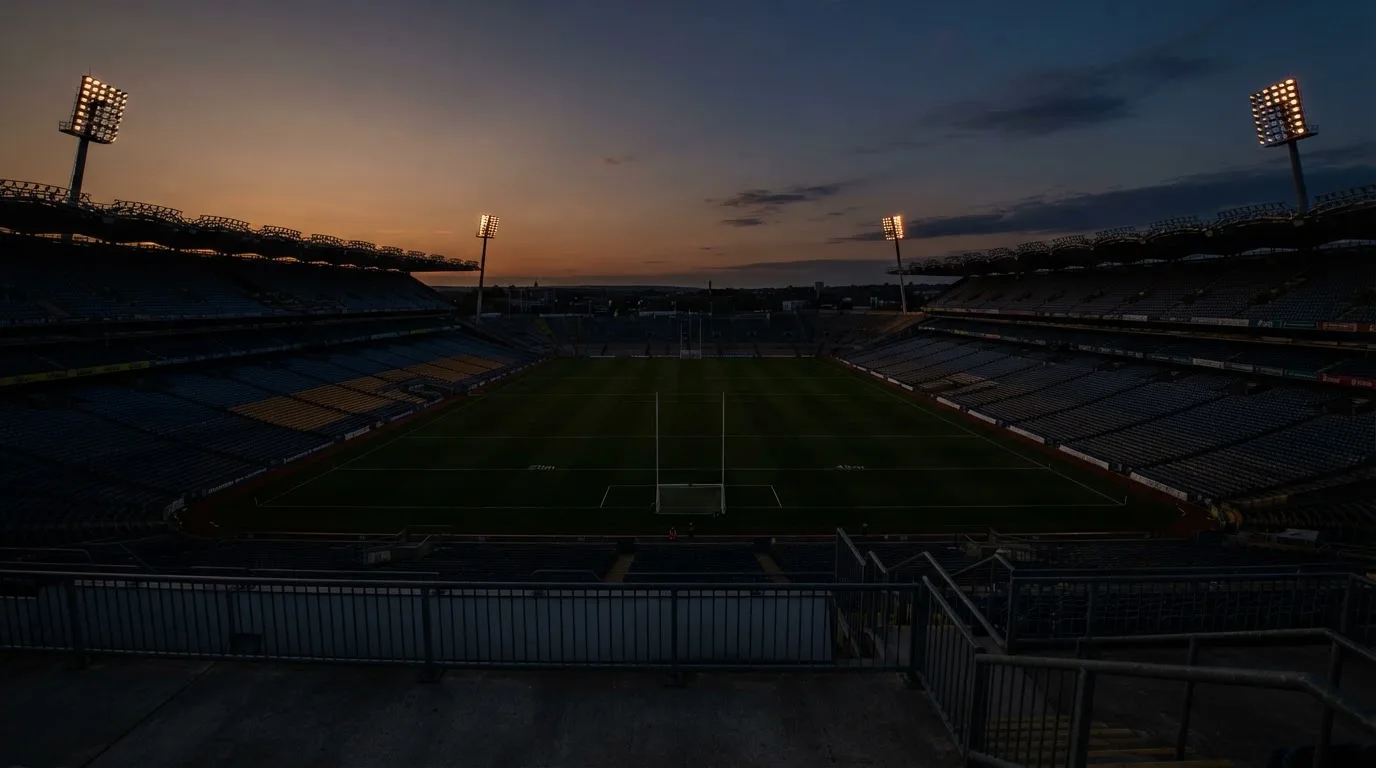
Gaelic football is played by teams of 15 players, with up to 15 substitutes of whom six may be used. Senior inter-county matches last 70 minutes in two 35-minute halves, and most other adult matches last 60 minutes in two 30-minute halves. The pitch is a rectangular grass surface 130 to 145 metres long and 80 to 90 metres wide, and the sport is governed by the Gaelic Athletic Association, with the All-Ireland Senior Football Championship final held each year at Croke Park, Dublin. Kerry hold the record for most All-Ireland Senior Football Championship titles, with 39. The 2026 final was played on 26 July 2026 at Croke Park, with Mayo beating Kerry 1–20 to 1–17 for their fourth title.
Those rules are the frame the betting markets sit in. The two facts that shape the odds the most are the scoring system and the match length. A goal — the ball under the crossbar into the net — is worth 3 points. A point — the ball over the crossbar — is worth 1 point. So a final scoreline of 1–20 is not 21 points; it is 1 goal and 20 points, scored as 3 + 20 = 23 points, and a bettor who reads a 1–20 line as a 20-point win is undercounting by 3. Since the 2025 rule changes, shots from outside the new 40-metre arc are worth 2 points, a two-point score that sits between the goal and the point in value and that has changed how the in-play market is read.
How the prices are quoted
GB bookmakers quote Gaelic football odds in fractional form by default, with the decimal form shown alongside. Fractional odds of 5/1 mean a £1 stake returns £5 in profit plus the £1 stake back, for a £6 return. Decimal odds of 6.00 mean a £1 stake returns £6 in total, of which £5 is profit. The conversion is a/b → a ÷ b + 1: 5/1 becomes 1 ÷ 5 + 1, which is 1.20, not 6.00. The correct conversion of 5/1 is 5 ÷ 1 + 1 = 6.00. The two forms describe the same price, and the same stake returns the same money whichever form the bettor reads.
A 1/1 price, written as “evens”, returns £2 on a £1 stake: £1 profit and £1 stake. An “odds-on” price is anything shorter than evens, so 4/6 (decimal 1.67) is odds-on and returns £1.67 on a £1 stake, of which £0.67 is profit. A “long” price is anything from 5/1 upward, and GAA outright markets — the All-Ireland championship winner, the top scorer — sit in the long-price range because the field is wide and the favourites are not strong.
What a winning bet pays
The return on a winning bet is the stake multiplied by the decimal odds, and the profit is the stake multiplied by the decimal odds minus 1. A £10 bet at decimal odds 3.75 returns £37.50, of which £27.50 is profit. A £10 bet at decimal odds 1.67 returns £16.70, of which £6.70 is profit. A combination bet — a double, a treble, an accumulator — pays the stake multiplied by the product of the decimal odds on each leg, and each leg must win for the bet to pay. A £5 accumulator at decimal odds 2.00, 3.00 and 4.00 returns £5 × (2.00 × 3.00 × 4.00) = £120, of which £115 is profit. The catch is that the margin on each leg is multiplied through, so an accumulator’s true cost to the bettor is higher than any single leg’s margin.
Each-way betting — two bets of equal stake, one on the win and one on the place — doubles the stake for the same selection. A £5 each-way bet is a £5 win bet and a £5 place bet, with the place terms set by the operator and the sport. In horse racing the place terms are a fraction of the win price (a quarter, a third, a fifth), and in Gaelic football the each-way market is offered on selected outright tournaments with the operator’s own place terms. The stake is not refunded on a place-only each-way win; the place bet pays its own price, which is a fraction of the win price.
What the bookmaker keeps: the margin
The bookmaker’s margin is the share of every pound bet on a market that the bookmaker keeps on average, and it is built into every price on the book. The way to see it is to take a two-way market — match result 1X2 is three-way, so the cleanest read is a market with two outcomes, like a handicap that has been pushed to a level price — and to add up the implied probabilities.
For a two-way market at decimal odds 1.90 / 1.90, the implied probability of each outcome is 1 ÷ 1.90, which is 0.5263, or 52.63%. Add the two: 52.63% + 52.63% = 105.26%. The bookmaker’s payout share is the inverse of the sum of the implied probabilities, so 1 ÷ 1.0526 = 0.95, or 95%. The bookmaker’s margin is 1 minus the payout share, so 1 − 0.95 = 0.05, or 5%. On a £100 stake across the two outcomes at this margin, the bookmaker keeps £5 on average and pays out £95 in winnings.
The 5% figure is illustrative. Real bookmaker margins on Gaelic football are higher than on English Premier League football because the market is smaller, the liquidity is thinner and the operator’s risk on a single game is greater. A typical 1X2 margin on a Premier League game runs from 2% to 4% overround, and the same margin on an All-Ireland quarter-final runs from 5% to 8% overround on the main lines. The overround is the extra percentage above 100% that the implied probabilities add up to, and it is the margin by another name. The wider the overround, the more the bookmaker keeps and the less the bettor wins on a true outcome.
The cost to the bettor is the gap between the price the bookmaker offers and the “true” price that a perfectly efficient market would offer. On a market with 5% overround, a bet at 1.90 is paying 1.90/1.00 = 1.90/0.95 = 2.00 in fair terms, so a £10 bet at 1.90 is, in expectation, paying £0.50 less than it would at the fair price. Across a season of bets at the same margin, that £0.50 on every £10 staked is the cost the bettor pays for the bookmaker’s service. It is not a fee; it is the price of the bet, paid in expectation.
Why the margin widens on a small market
Gaelic football sits in the small-market bracket by GB bookmaker standards. The fixture list is short — the All-Ireland championship runs from January to July, the club championship runs from August to March, and the provincial championships straddle the two — and the operator’s risk on any single game is concentrated. A Premier League bookmaker spreads risk across ten games a weekend; a GAA bookmaker may have three.
The wider margin is the price of that risk. A bookmaker who takes a thin book on a GAA match and gets one outcome wrong can lose more in absolute terms than the same outcome on a Premier League game, because the liquidity to lay off the risk on a betting exchange is thinner. The bettor pays for that in the overround. The market that approaches a true two-way price is the one with the most money behind it, and on Gaelic football that is the All-Ireland final and the All-Ireland semi-finals. The provincial quarter-finals and the lower rounds of the club championship are where the margin is widest.
A bettor who wants to narrow the margin reads the price on the All-Ireland final, the All-Ireland semi-finals and the marquee inter-county games, and treats the lower rounds as coupon material rather than value material. The bet on the bigger game is the bet where the bookmaker’s risk is shared with the rest of the market, and the price the bettor sees is closer to the price the bookmaker would offer a sharper customer.
The legal frame for Gaelic football betting in Great Britain
The legal frame for any bookmaker serving customers in Great Britain is the Gambling Act 2005, which covers England, Scotland and Wales, and the Gambling (Licensing and Advertising) Act 2014, which brought remote operators into the Commission’s licensing perimeter wherever they are based. A bookmaker who takes a bet from a customer in Great Britain needs a Gambling Commission licence, and the Commission’s public register is the whole test of who holds one. There is no state monopoly and no cap on the number of licences.
The licence categories that matter for Gaelic football are remote general betting standard (real events), which covers fixed-odds betting on real sporting events, and remote betting intermediary, which covers betting exchanges. Spread betting on a financial market is regulated by the Financial Conduct Authority, not the Commission, and Sporting Index is the brand in the set that holds both. A Curaçao, Maltese or Gibraltar licence is not a substitute for a Commission licence at the point of consumption: a brand licensed in one of those jurisdictions and not in Great Britain is serving the GB market unlicensed, and the protection that goes with a GB licence does not apply.
The Commission’s licence categories for betting are the test the public register uses to list a brand, and the categories are the test a bettor uses to check a brand’s offer. A brand licensed for remote general betting standard (real events) can offer fixed-odds betting on Gaelic football; a brand licensed only for virtual events cannot. The register lists the categories under each account, and the bettor who wants to check that a brand is licensed for the product they are about to bet on reads the categories on the register, not the marketing on the brand’s own site.
Verifying a licence
The Commission’s public register can be searched by business name, trading name, domain or account number, and the result is the licence status, the account number, the categories on the licence and the trading names the licensee operates. A bettor who sees a brand on a price-comparison site or in an advertisement and wants to check the licence goes to the register, types the brand name, and reads the account number against the marketing. The register is updated as licences are issued, varied, suspended or revoked, and the date of the last update is shown on the result. No GB-licensed bookmaker is “the only” licensed one, and a brand’s appearance on the register is not a recommendation.
Licensed operators use .com as well as .co.uk, so the domain proves nothing. A brand can hold a GB licence and serve customers from a .com address, and a brand can hold a non-GB licence and serve a .co.uk address to a non-GB jurisdiction. The licence is the test, not the domain, and the register is the source.
What may be bet on
There is no statutory list of permitted bets or markets. A bookmaker holds a licence for a category and offers markets under its own rules and the Licence Conditions and Codes of Practice (LCCP), and the Commission supervises the offer through the LCCP’s social responsibility and operating conditions rather than through a list of approved events. Gaelic football is treated as a real sporting event, and GB bookmakers price it under the same category as English football, rugby and tennis. Esports are treated like any other event, virtual events are a separate licence category, and bets on politics, TV shows and novelty markets are offered by GB bookmakers without a statutory prohibition.
In-play betting on Gaelic football is offered by the GB bookmakers who price the sport, and the controls are the operator’s licence conditions and customer-protection duties. The legal frame is not “unrestricted” as a conclusion; the legal frame is the LCCP’s social responsibility conditions, and the in-play product is whatever the operator offers under those conditions. A bettor who reads in-play as legally unfettered is reading past the LCCP.
Spread betting and the FCA
Financial spread betting is regulated by the Financial Conduct Authority, and a brand that takes spread bets on financial markets is regulated for that product by the FCA and for fixed-odds betting by the Commission. Sporting Index is the brand in the set that holds both, and the FCA regulation is the test for the spread side of the account. The brand’s own warning that spread losses can exceed the deposit is the FCA’s requirement, and the bettor who opens a spread book understands that the liability is not capped at the stake.
Spread betting on a sporting index is a different product from spread betting on a financial market, and the GB legal frame treats the two differently. Sporting Index’s sports indices are inside the Commission’s perimeter as fixed-odds betting or as a separate product the operator licenses, and the FCA regulation is for the financial side. A bettor who opens a Sporting Index account for Gaelic football is using the fixed-odds side, and the FCA’s spread-betting rules are not the frame for that bet.
Tax
The bettor pays no tax on betting winnings in Great Britain. The bookmaker pays General Betting Duty on its gross profits from betting, currently 15% across the main rate, and from 1 April 2027 a new remote betting rate of 25% applies within General Betting Duty while remote bets on UK horse racing, bets on self-self-service betting terminals in licensed premises, pool betting and in-person betting stay at 15%. Until 1 April 2027 the remote rate stays at 15%, and the question of whether operators pass duty on through odds is not established: a bettor who sees the price move after a duty change cannot read that move as the duty alone, and the bookmaker’s margin is a better explanation of any price move.
Spread betting carries its own rates — 3% on financial spread betting and 10% on other spread betting — and the duty is the operator’s, not the bettor’s. The bettor who plays at a GB-licensed bookmaker keeps the full return on a winning bet, less the stake, and the tax frame is the operator’s problem, not the bettor’s.
The offshore frame
A GB licence is compulsory at the point of consumption. Providing gambling facilities in Great Britain without the licence the Act requires is an offence under section 33 of the Gambling Act 2005, and the offence is aimed at the operator, not the customer. A customer who bets on an unlicensed site does not commit an offence under the Act, and the bettor who reads “legal to use” is reading past the Act: the law is silent on the customer, and the consequence of using an unlicensed site is the loss of the protection a licensed site provides.
The protection a licensed site provides is the whole point. A GB-licensed bookmaker is bound by the LCCP’s social responsibility conditions, the 10x bonus cap, the £150 financial vulnerability check, the GAMSTOP multi-operator self-exclusion scheme, the Commission’s complaints route and the approved alternative dispute resolution (ADR) provider, and the credit-card ban. An unlicensed site is bound by none of these, and the bettor who uses one has no British consumer redress if funds are withheld, no GAMSTOP coverage, no ADR route, and no Commission supervision of the operator’s conduct. The bet is not illegal; the bettor is not protected.
Enforcement against unlicensed operators is disruption rather than blocking. The Commission issues cease-and-desist notices, refers sites to search engines, works with registrars, hosts and payment providers, and has been given, or is about to receive, court-order DNS blocking powers. There is no wholesale ISP blocking in operation, and a bettor who reads “blocked” into the Commission’s enforcement record is reading past the record.
Responsible gambling at a GB-licensed bookmaker
The responsible-gambling frame at a GB-licensed bookmaker is the LCCP’s social responsibility code, and the bettor who uses a licensed site meets the frame at the account level. The minimum age is 18, and name, address and date of birth are verified before a customer can deposit or gamble, including with a free bet or a bonus, since 7 May 2019. No anonymous play is possible at a licensed site, and the verification step is the first protection a licensed site offers.
GAMSTOP is the national multi-operator online self-exclusion scheme, and it has been a mandatory licence condition for online operators since 31 March 2020. The self-exclusion periods are six months, one year, five years, or five years with auto-renewal, and after the minimum period the exclusion stays in place for a further seven years unless the customer asks GAMSTOP to remove it. GAMSTOP covers online sites and apps; betting shops use a separate service, and the bettor who self-excludes through GAMSTOP is excluded from every GB-licensed online operator on the scheme.
A financial vulnerability check is a public-record check the operator runs when a customer’s deposits minus withdrawals exceed £150 in a rolling 30 days, in force since 28 February 2025 under LCCP condition 3.4.4. The check looks at public records such as bankruptcy or county court judgments, and it is not an income check and not a credit reference check. The threshold is low by design: the check is the first of several safeguards the operator is expected to apply, and a positive result is a flag for further conversation, not an automatic block.
Financial risk assessments, the “affordability checks” of the press, are announced in a staged plan, with no start date as of the data snapshot. A bettor who reads the press coverage and assumes the check is in operation is reading past the announcement: the check is announced, staged, and not yet in force. The Commission’s article of 7 July 2026 sets out the plan, and the start date is the question to read, not the existence of the check.
Deposit limits are a Remote Technical Standards requirement, and the first changes have applied since 31 October 2025, with a second phase postponed to 30 September 2026 and the live status of the second phase not established. There is no state-set deposit or loss ceiling for betting: the deposit limit is the customer’s choice, and the operator must offer a limit on a fixed time frame. The bettor who wants a hard ceiling sets it themselves at the operator’s responsible-gambling page, and the ceiling is the bettor’s discipline, not the state’s.
Help is available outside the operator. GamCare runs the National Gambling Helpline, GambleAware funds treatment and research, the NHS runs gambling clinics across Great Britain, and Gamblers Anonymous runs peer-support meetings. The bettor who reads the responsible-gambling page at a licensed site and sees a link to one of these services is reading the right page; the bettor who reads the page and sees only the operator’s own tools has not read the page the LCCP requires.
Crypto and anonymous betting on Gaelic football
There is no British rule for or against cryptocurrency deposits at GB-licensed operators: the question is not established in the statute or the LCCP, and the operator’s own terms are the test. A GB-licensed bookmaker that accepts a cryptocurrency deposit is bound by the LCCP’s customer-due-diligence conditions regardless of the payment method, and the verification step before the first deposit is the same whatever rail the money arrives on.
Identity verification before the first deposit means no anonymous play at a licensed site, and the source-of-funds questions that follow at higher spend are the money-laundering rules in operation. The bettor who reads “anonymous” into a cryptocurrency deposit is reading past the verification step: the deposit may be in a cryptocurrency, but the account is in a name, and the name is verified.
A GB-licensed bookmaker that takes cryptocurrency is doing so as a payment method, not as a way around the verification step, and the protection a licensed site provides is unchanged. The bettor who wants to bet on Gaelic football with a cryptocurrency is using a payment rail, not a different regulatory frame, and the LCCP, the GAMSTOP scheme, the bonus cap and the dispute-resolution route are all the same.
An unlicensed site that markets itself as a “crypto sportsbook” is not bound by the LCCP, and the bettor who uses one has none of the protection a licensed site provides. The bet is not illegal under the Act, and the bettor is not protected by the Act. The cost of an unlicensed site is the loss of every safeguard a licensed site offers, and the cryptocurrency framing is the marketing on top of that loss.
The market research turns up no GB-licensed operator that prices Gaelic football and markets itself on cryptocurrency rails in the way the unlicensed sites do, and the bettor who wants the sport under a licensed frame is using a debit card, a bank-based payment, an e-wallet or a prepaid card, not a cryptocurrency. The licensed frame is the test, and the payment method is the means.
Bonuses and free bets on Gaelic football
The welcome offer at every GB-licensed bookmaker is built around a free bet or a bet credit, and the structure of the offer is the standard shape the market has converged on: deposit a minimum, place a qualifying bet at minimum odds, receive a free-bet return, use the free bet inside a stated window. The qualifying bet is paid at the operator’s full price, and the free-bet return does not pay the stake back on a win.
The rules in force since 19 January 2026 cap wagering requirements on bonuses at 10x — a £10 bonus at 50x wagering would need £500 of bets, and under the cap no more than £100. The cap applies to bonuses with a wagering condition, and whether it applies to free bets with no wagering condition, and any cap on the money value of a bonus, are not established. The bettor who sees a welcome offer with a wagering requirement reads the small multiplier first, and the cap is the ceiling on the multiplier, not on the offer’s value.
Mixed-product promotions — an offer that requires gambling on two or more product types such as betting, casino, bingo and lottery — are banned. A welcome offer that conditions a sportsbook free bet on a casino deposit is not the kind of offer a licensed operator can run, and a bettor who sees one is looking at an offer that should not be in the market. The bettor who wants the sportsbook side of a bundle claims it on its own terms and treats the casino leg as a separate decision.
A free bet whose stake is not paid back is worth less than the headline number, and the value is the free-bet amount multiplied by the decimal odds minus 1, divided by the decimal odds, and adjusted for the margin of the market the free bet is used on. A £10 free bet at decimal odds 3.00 on a market with 5% margin is worth £10 × (3.00 − 1) ÷ 3.00 × 0.95 = £6.33 in expectation, not £20. The headline “£10 free bet” is the stake, not the value, and the bettor who reads the value as the headline is reading the marketing.
The cost of a welcome offer to the bettor is the qualifying bet at the operator’s margin plus the dead time between the free bets landing and the matches they fit. A £10 free bet that lands on a Wednesday and expires the following Wednesday, on a sport whose fixtures are Saturday and Sunday, gives the bettor one weekend to use it. The bettor who lets the free bet expire eats the whole value, and the bettor who uses it on a market they would not otherwise have bet on is overpaying for the privilege.
A price boost — a one-off enhanced price on a specific selection — is a different product, and the value is the difference between the boosted price and the un-boosted price, less the margin on the underlying market. A price boost on a Gaelic football match at 5/1 (decimal 6.00) when the un-boosted price is 4/1 (decimal 5.00) is worth £1 in decimal terms per £1 staked, less the underlying margin. The boost is real money, not a free bet, and the stake is returned on a win. The catch is the bettor has to find the boosted selection in the operator’s app, and the boost is offered on the operator’s terms.
Accumulator insurance — a refund as a free bet or bet credit if one leg of an accumulator lets the bet down — is a third product, and the value is the probability of one leg losing multiplied by the refund amount. A 4-leg accumulator on a sport with a 5% margin has roughly a 35% chance of one leg letting the bet down, and a refund of the stake as a free bet on a one-leg loss is worth 35% of the stake in free-bet value, which is the free-bet value formula above. The cost of the insurance is the operator’s margin on the four legs, which is higher than the margin on any single leg, and the bettor who buys the insurance is paying for the refund in margin.
The bettor who wants the value of a welcome offer reads the qualifying terms first, the free-bet validity window second, and the stake-not-returned condition third. The marketing on the welcome banner is the last thing to read, and the value is the figure the marketing does not print.
Live betting and cash out on Gaelic football
Live betting on Gaelic football is offered by the GB bookmakers who price the sport in-play, and the markets are the same shape as the pre-match markets — match result, next score, total points, handicaps — with a smaller range and a wider margin. The in-play price is a function of the scoreline and the time remaining, and a goal is worth 3 points while a point is worth 1, so a one-goal swing in the in-play market is a 3-point swing in the match, not a 1-point swing. A bettor who reads a 1-point in-play move as a goal is reading past the scoring system.
Cash out is a feature the operator offers on selected markets, and the cash-out price is the operator’s settlement price for the position, not the backer’s price. A backer who backed a team at 2.00 pre-match and wants to cash out at 1.50 in-play is selling the position back to the operator at 1.50, and the operator keeps the spread between the cash-out price and the true price. The cash-out price is the operator’s, and the bettor who treats cash out as the same as closing the position at a betting exchange is reading past the spread.
Auto cash-out, offered by brands such as Sporting Index, lets the bettor set a price at which the position is closed automatically, and the feature is the bettor’s discipline made automatic. The cost of the feature is the same as manual cash out: the spread between the auto cash-out price and the true price, which the operator keeps. The bettor who sets an auto cash-out at a price they would not have taken manually is overpaying for the automation.
Live streaming of Gaelic football is offered by some GB bookmakers on selected fixtures, and the stream is the operator’s feed under a rights deal with the GAA’s broadcast partner. The stream is available to funded account holders, and the in-play markets sit alongside the stream in the app. A bettor who reads the in-play product as the stream is reading the wrong feature: the in-play product is the markets, and the stream is the picture on the same screen.
The bettor who wants to bet in-play on Gaelic football reads the operator’s in-play schedule for the fixture, the markets offered in-play, and the cash-out availability on each market, and the in-play offer is the smallest of the four: the GAA fixture list is short, the in-play markets are narrower than the pre-match markets, and the margin is wider. The bettor who treats in-play as the same as pre-play is paying for the privilege, and the cost is the wider margin.
Bet types and odds formats
The bet types priced on Gaelic football at GB bookmakers are the same shape as on any other sport: single, double, treble, accumulator, each-way, handicap, total points, BTTS (both teams to score), and the same-game multi or bet builder. The odds formats are fractional and decimal, with the American format offered by some operators as a third view.
A single is one bet on one selection, and the return is the stake multiplied by the decimal odds. A double is one bet on two selections, both of which must win, and the return is the stake multiplied by the product of the two decimal odds. A treble is one bet on three selections, all of which must win. An accumulator is one bet on four or more selections, all of which must win, and the odds multiply through. A bet builder is one bet on multiple markets from the same event, and the odds are combined by the operator.
Each-way betting is two bets of equal stake, one on the win and one on the place, and the place terms are set by the operator. In Gaelic football the each-way market is offered on selected outright tournaments — the All-Ireland Senior Football Championship, the provincial championships, the All-Ireland club championship — and the place terms are typically a quarter of the win odds for a place in the first four, or a fifth of the win odds for a place in the first three. The stake is doubled, and the place bet pays its own price.
A handicap is a market in which one team starts with a virtual points deficit or surplus, with the handicap settled on the actual score adjusted for the handicap. A team handicapped +3 starts 3 points up, and a bet on that team wins if the adjusted margin of victory is greater than zero. A team handicapped −3 starts 3 points down, and a bet on that team wins if the adjusted score is greater than zero after the 3-point penalty. The handicap line is set by the operator, and the price on each side is a function of the operator’s view of the gap between the teams.
A total points market is a bet on the combined score of both teams being over or under a line set by the operator. A line of 30.5 means the combined score must be 31 or more for the over to win, and 30 or fewer for the under to win. The half-point avoids the push, and the line is set by the operator. A team total is a bet on one team’s score being over or under a line, and the line is set the same way.
BTTS — both teams to score — is a market on both teams registering at least one point in the match. The bet is settled on the scoreline, and a 1–20 to 0–15 scoreline is a BTTS win for both sides because both teams scored. A 1–20 to 0–0 scoreline is a BTTS loss. The market is a function of the scoring system, and a one-sided game can still be a BTTS win if the losing team scores a point.
A bet builder is a same-game multi — a bet that combines multiple markets from the same event into a single bet, with the odds combined by the operator. A bet builder on Mayo to win, over 30.5 total points and BTTS yes combines three markets from the same match, and the odds are combined by the operator into a single price. The cost of the bet builder is the operator’s margin on each leg plus the margin the operator adds for combining them, and the combined margin is higher than the margin on any single leg. The bettor who treats a bet builder as the same as three separate singles is reading past the combined margin.
Gaelic games and tournaments
The Gaelic Athletic Association governs Gaelic football and hurling, and the two sports sit on the same fixture calendar. The inter-county season runs from January to September, with the Allianz National Leagues running through the spring, the provincial championships running through the early summer, and the All-Ireland Senior Football Championship running from May to July. The All-Ireland final is the last game of the season, and the 2026 final was played on 26 July 2026 at Croke Park, with Mayo beating Kerry 1–20 to 1–17 for their fourth title.
The club championship runs from August to March, with the All-Ireland club championship final in January. The club championship is the lower-prized of the two competitions, and the bookmaker coverage is thinner. The provincial championships — the Leinster, Munster, Connacht and Ulster championships — sit between the National Leagues and the All-Ireland championship, and the bookmaker coverage is competitive on the provincial finals and thinner on the provincial quarter-finals.
The women’s inter-county season runs alongside the men’s, with the All-Ireland Senior Ladies’ Football Championship played in the same Croke Park window as the men’s competition, and the bookmaker coverage on the women’s championship is growing. The TG4 All-Ireland Senior Ladies’ Football Championship final is the marquee game, and the bookmaker coverage is competitive on the final and thinner on the earlier rounds.
The bookmaker’s coverage of Gaelic football is a function of the audience, and the audience is a function of the broadcast. The All-Ireland championship is broadcast live in Ireland by RTÉ and in Great Britain by Premier Sports and, for selected games, by the BBC, and the bookmaker’s live schedule is shaped by the broadcast schedule. A bettor who wants in-play on a Connacht championship game in May is asking the bookmaker for a product the broadcast partner is not selling, and the in-play offer is the smallest of the four.
The lower-tier competitions — the Allianz National Leagues, the Christy Ring Cup, the Nickey Rackard Cup, the Lory Meagher Cup, the Joe McDonagh Cup — are covered by the GB bookmakers as a short coupon or not at all, and the bettor who wants a deep menu on those competitions looks at the Irish bookmakers, where the coverage is the product rather than a side bet.
How the calculation reads
The arithmetic the page claims is the margin on an illustrative two-way market at decimal odds 1.90 / 1.90, the kind of level price a bookmaker would offer on a tight handicap or a tight total. The implied probability of each outcome is 1 ÷ 1.90, or 52.63%. Add the two: 105.26%. The bookmaker’s payout share is 1 ÷ 1.0526, or 95%, and the bookmaker’s margin is 1 − 0.95, or 5%.
The 5% figure is a band, not a point. Real margins on Gaelic football sit between 5% and 8% overround on the main lines, with the wider end on the lower rounds and the tighter end on the All-Ireland final. The 1.90 / 1.90 example is a clean read of the math, not a quoted price on a specific market, and the bettor who reads 5% as the margin on a specific match is reading past the example.
The cost of a 5% margin to the bettor is the gap between the offered price and the fair price. On a £10 bet at 1.90, the offered return is £19, and the fair return at 0% margin would be £20. The £1 difference is the cost the bettor pays in expectation, and across a season of bets at the same margin, the cumulative cost is the bookmaker’s revenue from the bettor’s staking. The cost is not a fee; it is the price of the bet, paid in expectation.
The same arithmetic on a wider market, say 1.80 / 2.00, gives an implied probability of 55.56% on one side and 50% on the other, totalling 105.56%, a payout share of 94.73% and a margin of 5.27%. The 1.90 / 1.90 is the cleanest read of the math because the two outcomes are priced the same, and the bettor who wants to check the margin on a real market does the same arithmetic on the offered prices. The offered price is the only input the bettor has, and the margin is the output the math gives.
The calculation is an estimate. An average over many bets under the stated assumptions, not a guaranteed outcome for any single bettor. A bet at 1.90 / 1.90 with a 5% margin does not always lose 5% of the stake; it loses 5% in expectation, across many bets at the same margin. The bettor who treats the margin as a per-bet cost is reading past the math.
The verdict on the market
Gaelic football is a small, deep market at the GB-licensed bookmakers, and the bettor who uses it well is the bettor who reads the price for what it is: a function of the bookmaker’s view of the match, the bookmaker’s margin, and the bookmaker’s risk on a single game. The bookmakers who price the sport are the brands in the top-10 review, and the bettor who reads the licence first, the welcome offer second, and the price third is reading the right order.
The licence is the test of whether a brand is regulated at all, and the Commission’s public register is the source. The welcome offer is the marketing on top of the product, and the bettor who reads the qualifying terms, the validity window and the stake-not-returned condition first is reading the offer rather than the marketing. The price is the product, and the bettor who reads the margin on a real market, the overround on a 1X2, and the value on a price boost is reading the product rather than the headline.
The bettor who wants a wide GAA menu and a sharp price on the All-Ireland championship goes to a brand in the set that has priced the sport for years, and the bettor who wants a one-off welcome offer and is happy to use it on the GAA coupon goes to a brand in the set with a current offer. The two are not mutually exclusive, and the bettor who wants both is choosing between the brands in the top-10 review on the trade-off the two products make.
The cost the bettor pays is the bookmaker’s margin on every bet, and the cost is the price of the bet, not a fee on top. The protection the bettor gets is the LCCP’s social responsibility code, the GAMSTOP scheme, the bonus cap, the financial vulnerability check, the dispute-resolution route, and the British consumer redress. The bettor who uses a licensed site pays the margin and gets the protection; the bettor who uses an unlicensed site pays the same margin or a wider one and gets none of the protection.
The margin on a two-way market at 1.90 / 1.90 is 5%, and the real margin on a Gaelic football market is wider. The bettor who reads the margin on a real market is reading the product, and the bettor who reads the product is the bettor who keeps more of the return on a winning bet.
Frequently asked questions
How do you bet on Gaelic football?
A bettor opens an account at a GB-licensed bookmaker, verifies name, address and date of birth before the first deposit, and chooses a market on the All-Ireland Senior Football Championship, the provincial championships or the club championship. The bet is a stake on a selection at a price, and the bet is settled on the actual outcome. A winning bet returns the stake multiplied by the decimal odds, and a losing bet returns nothing.
How can it be checked that a bookmaker holds a Gambling Commission licence?
The Commission’s public register can be searched by business name, trading name, domain or account number, and the result is the licence status, the account number, the categories on the licence and the trading names the licensee operates. A bettor who sees a brand on a price-comparison site and wants to check the licence goes to the register, types the brand name, and reads the account number against the marketing.
How is the return on a bet worked out from the stake and the odds?
The return on a winning bet is the stake multiplied by the decimal odds, and the profit is the stake multiplied by the decimal odds minus 1. A £10 bet at decimal odds 3.75 returns £37.50, of which £27.50 is profit. A combination bet pays the stake multiplied by the product of the decimal odds on each leg, and each leg must win for the bet to pay.
What is the bookmaker’s margin and how can it be seen in the odds?
The bookmaker’s margin is the share of every pound bet on a market that the bookmaker keeps on average, and it is built into every price on the book. The way to see it is to take a market’s prices, work out the implied probability of each outcome as 1 divided by the decimal odds, add the implied probabilities together, and subtract the total from 1. On a two-way market at 1.90 / 1.90 the implied probabilities add to 105.26% and the margin is 5%.
How do fractional odds such as 5/1 convert to decimal odds such as 6.00?
The conversion of fractional odds a/b to decimal odds is a divided by b plus 1, so 5/1 becomes 5 ÷ 1 + 1 = 6.00, and 11/4 becomes 11 ÷ 4 + 1 = 3.75. The two forms describe the same price, and the same stake returns the same money in either form. A price of 1/1, written as “evens”, returns £2 on a £1 stake in fractional terms and 2.00 in decimal terms, with £1 profit and the £1 stake back.
Which tools for controlling play does a licensed bookmaker have to offer?
A licensed bookmaker must offer GAMSTOP self-exclusion, deposit limits on a fixed time frame, timeouts, reality checks, and access to help-line information. The financial vulnerability check applies when deposits minus withdrawals exceed £150 in a rolling 30 days, and the check is a public-record check, not an income check. The bettor who wants a hard ceiling sets a deposit limit at the responsible-gambling page, and the ceiling is the bettor’s choice, not the state’s.
Rugby, cricket & Gaelic – Legalbettinguk.com
Content created by the «Legalbettinguk.com» team
